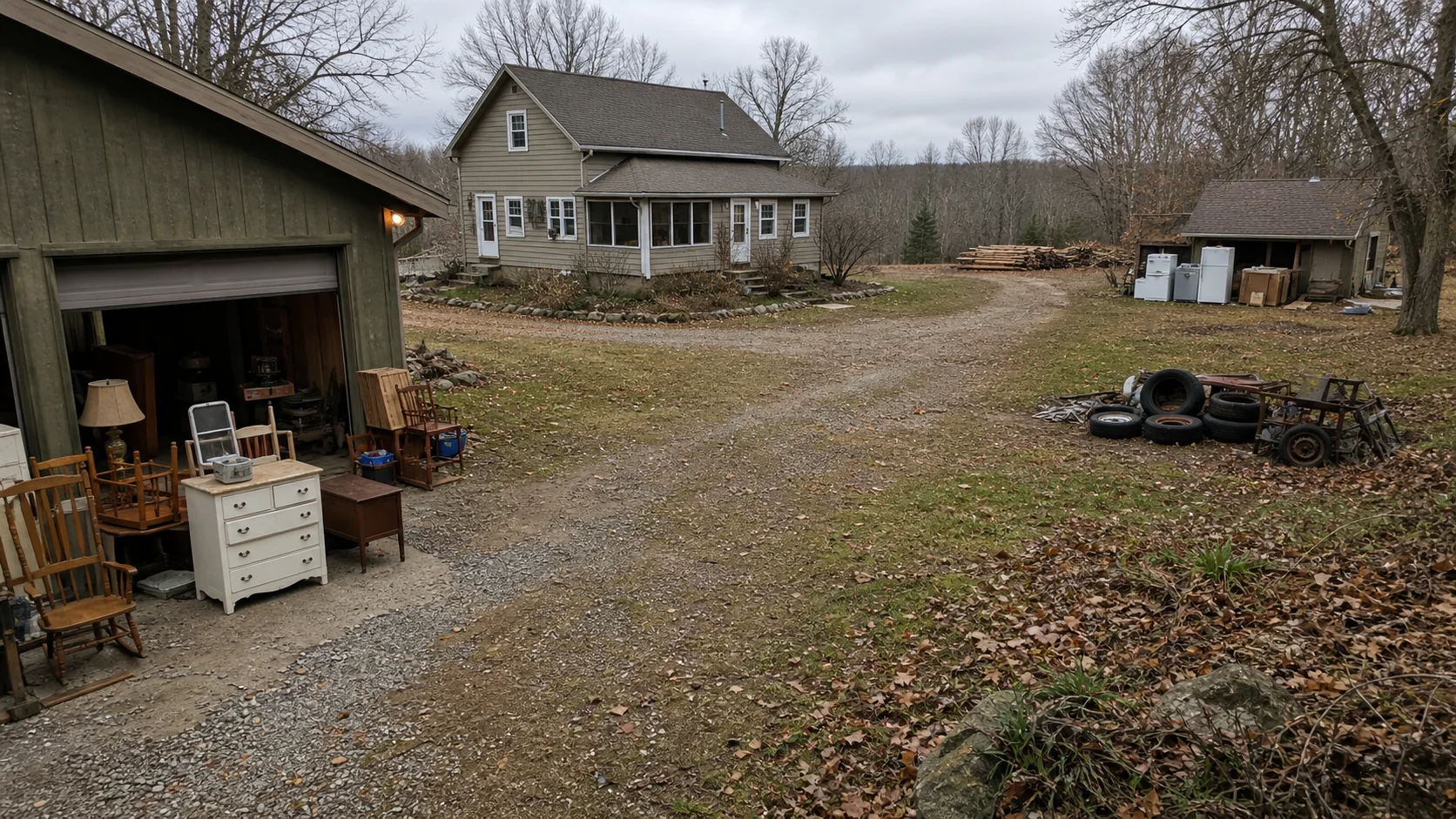
There is no single statewide price that usefully describes every Wisconsin property cleanout. Cost is constructed from what and how much must be handled, where it is located, the structures and exterior areas involved, access, equipment and disposal requirements, and—most importantly—the final property condition the owner needs. A Property Assessment turns those conditions into a defined scope.
At a glance
Key Takeaways
| Volume | The amount and distribution of contents affect sorting, carrying, staging, hauling and disposal. |
|---|---|
| Labor | Dense rooms, stairs, long carries and item-by-item decisions change the handling plan. |
| Structures | A house, basement, garage, shed and workshop are separate work areas, even on one property. |
| Exterior conditions | Dispersed debris, scrap, tires, appliances and concealed material can create another workstream. |
| Material type | Heavy, specialty or separately managed material requires different handling and disposal paths. |
| Access | Driveways, gates, terrain, seasonal ground and vehicle positioning affect how work can proceed. |
| Equipment | Equipment can reduce manual handling when the material, terrain and working clearances are suitable. |
| Final condition | The required result—selected removal, empty structures or a property ready for its next use—defines the scope. |
Why Truckload Pricing Has Limits
A truckload can describe hauling capacity, but it cannot fully describe a property cleanout. It leaves out the time needed to make decisions, clear several structures, carry material from difficult locations, create safe access, separate disposal streams or bring the property to a defined result.
Truckload comparisons may be useful only when material is already approved, consolidated, ordinary to handle and accessible. A whole-property estimate should instead connect labor, logistics and disposal to the actual work areas and finish. Peterson’s does not publish a generic statewide rate, minimum, per-load figure or price range.
Eight Drivers of Property Cleanout Cost
Amount and volume
More material usually means more sorting, carrying, staging, hauling and disposal. Distribution matters too: material spread across rooms, structures and exterior zones is different from the same apparent volume gathered beside an accessible loading area.
Labor and handling
Stairs, narrow openings, long carries, fragile surroundings, dense rooms and heavy pieces can increase the time and coordination required. Decision-by-decision sorting also changes the work compared with material already approved for removal.
Structures involved
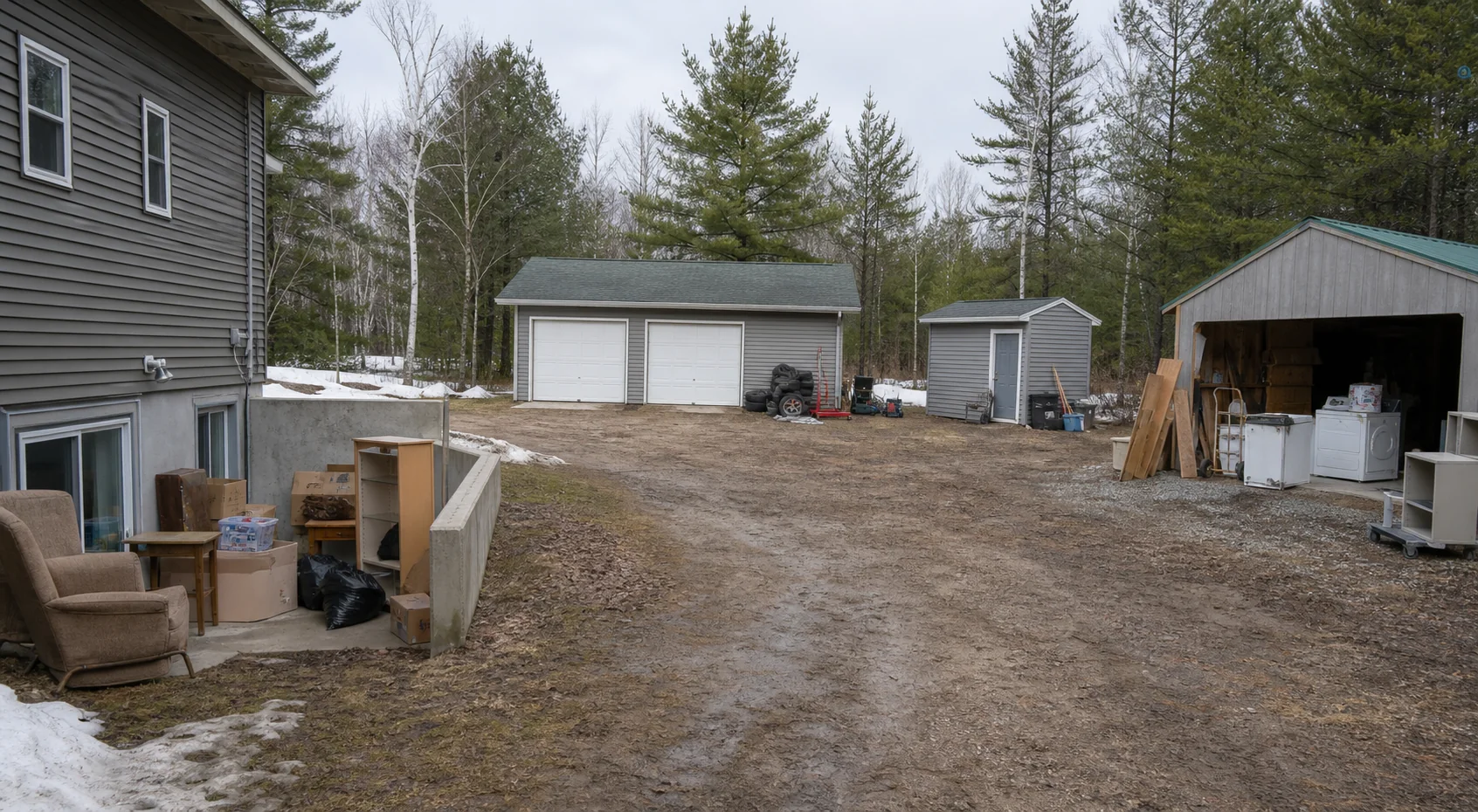
A basement, attached garage, detached garage, shed, workshop or barn is its own work area. Each can hold different material and require a separate sequence, even when every structure belongs to one property.
Interior and exterior conditions
Interior work is shaped by rooms, floors and carrying routes. Exterior material may be dispersed, weathered, concealed by vegetation or positioned beyond normal truck access. A reliable scope describes both instead of treating outdoor conditions as an add-on.
Access and site conditions
Long private drives, tight gates, soft ground, steep grades, snow, spring thaw and limited loading space can affect vehicle position, carry distance and timing. Access is an operating condition, not a footnote.
Equipment requirements
Equipment-assisted movement can be appropriate for substantial exterior material or focused preparation, but only when terrain, clearances, material type and ground conditions support it. Mobilization and safe operating space are part of the scope.
Material and disposal paths
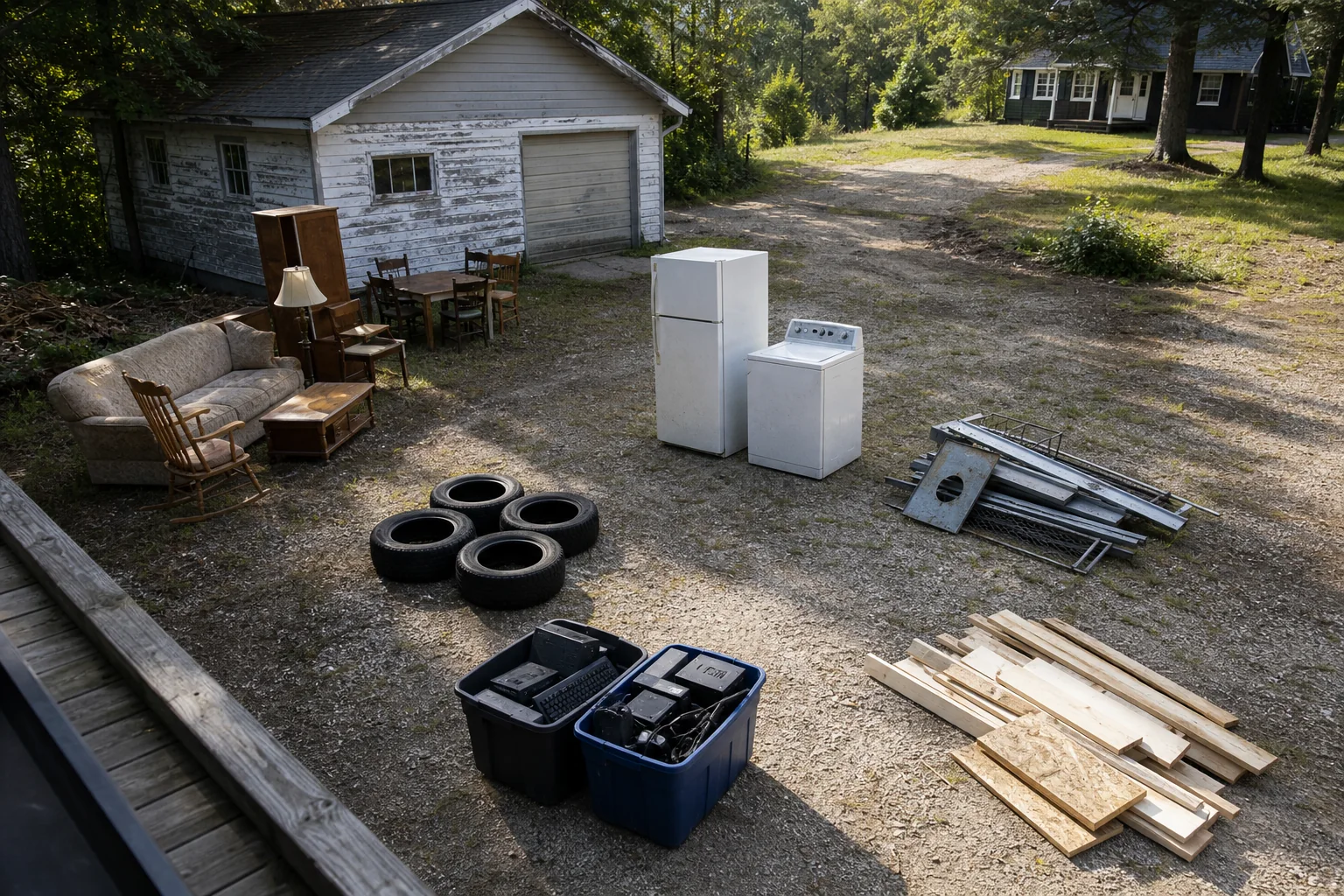
Furniture, household contents, appliances, tires, scrap, electronics, construction material and oversized items do not necessarily follow one disposal route. Sorting, destination requirements and separate providers affect the plan. The presence of an item does not mean Peterson’s automatically accepts it.
Required final property condition
This is the controlling factor. Removing selected contents, emptying every authorized structure and preparing a property for listing, renovation, contractor access or turnover are different results. The estimate should state the finish being created, what is included and what remains excluded.
Property Type Changes the Scope
The property label alone does not set cost. These examples show what commonly changes the operating plan without assigning unsupported dollar amounts.
| Property type | Typical scope considerations | What the estimate must define |
|---|---|---|
| Partially filled residence | Selected rooms or contents, with clear decisions and ordinary access | Included rooms, carry paths and the condition of areas that remain |
| Full house + basement | Multiple interior work areas, stairs, dense storage and mixed household material | Every included level, handling limits and the required interior finish |
| Estate + garage/outbuildings | Household decisions plus tools, equipment, scrap, appliances and detached storage | Authorization, KEEP / REMOVE / REVIEW decisions and every included structure |
| Rural whole-property | Several structures, exterior zones, long drives and material dispersed across acreage | Access, equipment fit, seasonal limits, staging and disposal routes |
| Vacant/foreclosure property | Unknown or abandoned contents, exterior conditions, documentation and contractor access | Authorized scope, exclusions, phases and the property’s next use |
| Commercial property | Tenant-left contents, storage, exterior areas and an operational turnover target | Authorized work areas, schedule, site access and readiness for the next professional |
Material Type and Disposal Complexity
A property can contain household furniture, appliances, tires, scrap, electronics, construction offcuts and items needing separate coordination. Those categories affect sorting, loading, destinations and whether an appropriate outside provider is needed. Hazardous-material cleanup and environmental remediation are outside Peterson’s service.
For larger conditions that connect structures, exterior material, access and sequencing, review Peterson’s Property Recovery approach. The completed Spooner-area investor property recovery project shows how a historical phase was tied to specific inclusions and exclusions rather than generalized into a standard cleanout rate.
When Equipment Affects the Plan
Equipment can support substantial material movement, restore workable access or prepare an area for the next phase. It is not automatically the right method. The assessment considers terrain, ground conditions, clearances, nearby structures, material type and whether manual handling or another provider is more appropriate.
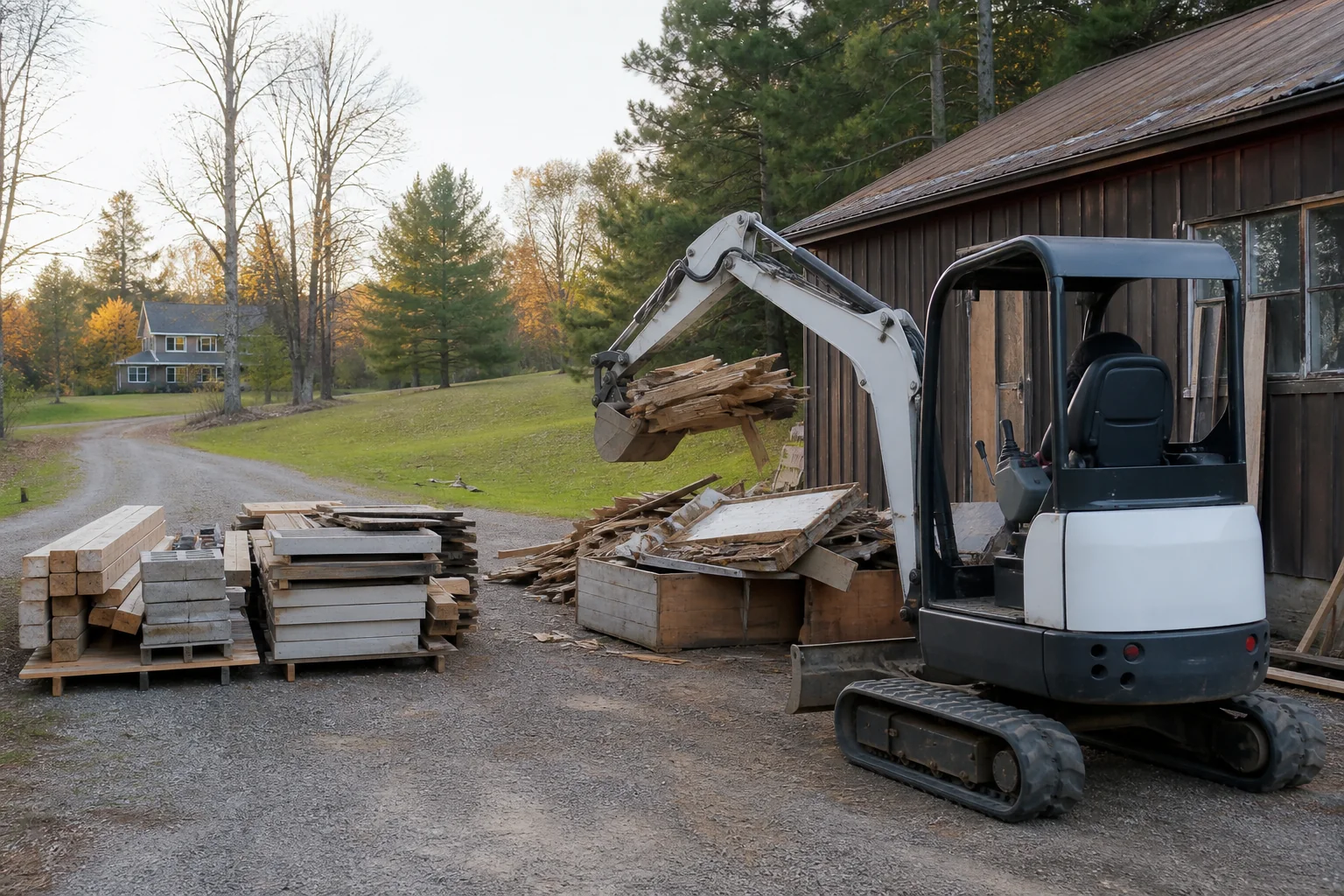
If cleanup must be followed by focused access preparation, rough material movement or an agreed site finish, see Site Preparation. Full excavation and unrelated construction remain outside the service.
Estate, Foreclosure and Commercial Cost Contexts
Estate and inherited properties
Estate work can add authorization, family decisions and multiple structures to the physical scope. Read the dedicated guide to estate cleanout cost in Wisconsin and the Estate Cleanouts decision process.
The completed whole-house cleanout in Hayward, Wisconsin provides project-specific context: an out-of-state owner inherited the property, and Peterson’s emptied the house, two-stall garage and two connected rooms over approximately six days using four 40-yard dumpsters of capacity. It demonstrates why a whole-property estimate must stay tied to the actual scope and conditions rather than a generalized Wisconsin rate.
Vacant, foreclosure and REO properties
Unknown contents, documentation, exterior conditions and readiness for contractors can change the sequence. Review Vacant, Foreclosure & REO Property Cleanup and what a foreclosure property cleanout can include.
Commercial properties
Commercial scope depends on authorization, tenant-left contents, storage, exterior areas, site access, schedule and the condition required for turnover or the next trade. See Commercial Site Cleanup.
What Can Make a Property Cleanout More Expensive?
- Contents packed densely or spread across many rooms and levels
- Basements, attics, stairs, long carries or restricted loading access
- Garages, sheds, workshops, barns or other detached structures
- Exterior material dispersed across acreage or concealed by vegetation
- Heavy, oversized or specialty items requiring separate handling
- Multiple disposal streams or destinations
- Soft ground, seasonal roads, snow, spring thaw or limited vehicle positioning
- Unresolved authorization or repeated KEEP / REMOVE / REVIEW decisions
- A final condition that includes complete property readiness rather than selected removal
What Can Reduce or Simplify the Scope?
One authorized decision-maker, wide photographs, a clear list of included structures, known material categories and a defined final condition make the assessment more efficient. Identifying what must remain—and consolidating KEEP / REMOVE / REVIEW decisions before physical work—can reduce pauses and resequencing.
Safe, workable access and accurate information about gates, drive conditions, stairs, utilities, seasonal limitations and heavy items also help. Customers should not move unsafe material or attempt work beyond their ability simply to simplify an estimate.
Northwest Wisconsin Conditions
Distance between structures, private drives, wooded acreage and seasonal access can matter around Cable property cleanouts and Minong property cleanouts. A house may be only one part of the physical scope.
Lake-country residences, rentals and inherited properties around Hayward property cleanouts can combine interior, garage and exterior decisions. In Ashland property cleanouts, residential-commercial and multi-structure conditions can require different access and disposal planning.
Owners and managers planning Superior property cleanouts may have denser neighborhoods, commercial spaces or Twin Ports logistics. These are planning considerations—not assumptions about every property in each community.
How a Property Assessment Creates a Useful Estimate
Peterson’s reviews the authorized work areas, visible material, access, equipment fit, disposal paths, exclusions, outside coordination and the property’s required final condition. Photos can support initial review, while substantial or uncertain properties may need an on-site assessment.
The result should state what Peterson’s is responsible for, what is excluded or pending, how phases are sequenced and what condition signals completion. That is why the assessment connects cost to a controlled whole-property recovery scope, not a generic count of loads.
Define the whole-property result
How Much Does a Property Cleanout Cost in Wisconsin?
The honest answer comes from the property itself: contents, structures, exterior conditions, access, handling, equipment, disposal and the finish required. Start with a scope that makes those conditions visible.
Request a Property Assessment ↗